34 Incredible Facts About Uganda — The Pearl of Africa
It's called the Pearl of Africa — and Churchill wasn't wrong. From the world's longest river to the rarest primates on earth, Uganda packs more wonder per square kilometre than almost anywhere else on the planet. Here's what most tourists never know before they arrive.
Uganda did not earn its nickname by accident.
When Winston Churchill visited in 1907 and called this landlocked East African nation "the Pearl of Africa," he was responding to something real a concentration of beauty, biodiversity and geographic drama that is genuinely difficult to find anywhere else on Earth. Snowcapped mountains. Rainforests older than human memory. Lakes so vast they have their own weather systems. More species of birds than the entire continent of North America.
Most people know Uganda, if they know it at all, for the gorillas. That is a bit like knowing Paris only for the Eiffel Tower. There is so much more and most of it will completely surprise you.
Here are facts about Uganda that most visitors never know before they arrive.
Geography & Nature
2. Uganda is entirely landlocked yet it contains more fresh water than most coastal nations. Nearly 18% of Uganda's total surface area is open water or swampland. Lake Victoria alone covers roughly 26,000 square kilometres within Uganda's borders.
3. Lake Victoria is Africa's largest lake and the world's second-largest freshwater lake by surface area. Shared between Uganda, Kenya and Tanzania, it covers 68,800 square kilometres in total roughly the size of Ireland. On clear days, you cannot see the far shore from Entebbe.
4. The Nile begins in Uganda. The White Nile flows out of Lake Victoria at Jinja, making this small Ugandan town the source of the longest river in the world a river that travels 6,650 kilometres before emptying into the Mediterranean Sea in Egypt.
5. Uganda has the third-deepest lake in Africa. Lake Bunyonyi in southwestern Uganda reaches depths of 44 metres in places and sits at an altitude of 1,962 metres above sea level. It is also one of the only lakes in Uganda believed to be free of bilharzia, making it safe to swim in.
6. The Rwenzori Mountains are permanently snowcapped — on the equator. The Rwenzori range, known as the Mountains of the Moon, contains glaciers and peaks above 5,000 metres despite sitting almost exactly on the equator. Margherita Peak, the highest point in Uganda and the third-highest in Africa, reaches 5,109 metres.
7. Murchison Falls is one of the most powerful waterfalls on Earth. At Murchison Falls, the entire volume of the Victoria Nile is forced through a gap just seven metres wide before plunging 43 metres. The pressure of water through that gap is among the highest recorded anywhere in the world.
8. Uganda has more than 60 protected areas. These include 10 national parks, 12 wildlife reserves, 13 wildlife sanctuaries and several forest reserves covering roughly 15% of the country's total land area.
9. The western arm of the Great Rift Valley runs through Uganda. The Albertine Rift, the western branch of the East African Rift System, forms Uganda's western border and contains some of the most biologically diverse habitats on the continent. Lakes Albert, Edward and George all sit within this geological feature.
10. Uganda has active volcanoes. The Virunga volcanic chain along the southwestern border includes active volcanoes most notably Nyiragongo across the border in DRC whose seismic activity is monitored continuously.
Wildlife
16. The shoebill stork looks like it was designed by a special effects department. Uganda is one of the best places in Africa to see the shoebill — a prehistoric-looking bird that stands up to 1.5 metres tall, has a bill shaped like a Dutch clog, and can stand completely motionless for so long that observers have mistaken it for a statue. Mabamba Swamp near Entebbe is the most reliable location
17. Uganda has recorded over 1,060 bird species. That is more than the entire continental United States and Canada combined, which together record around 900–950 species. Uganda represents roughly 11% of all bird species found on Earth, concentrated into a country slightly smaller than the United Kingdom.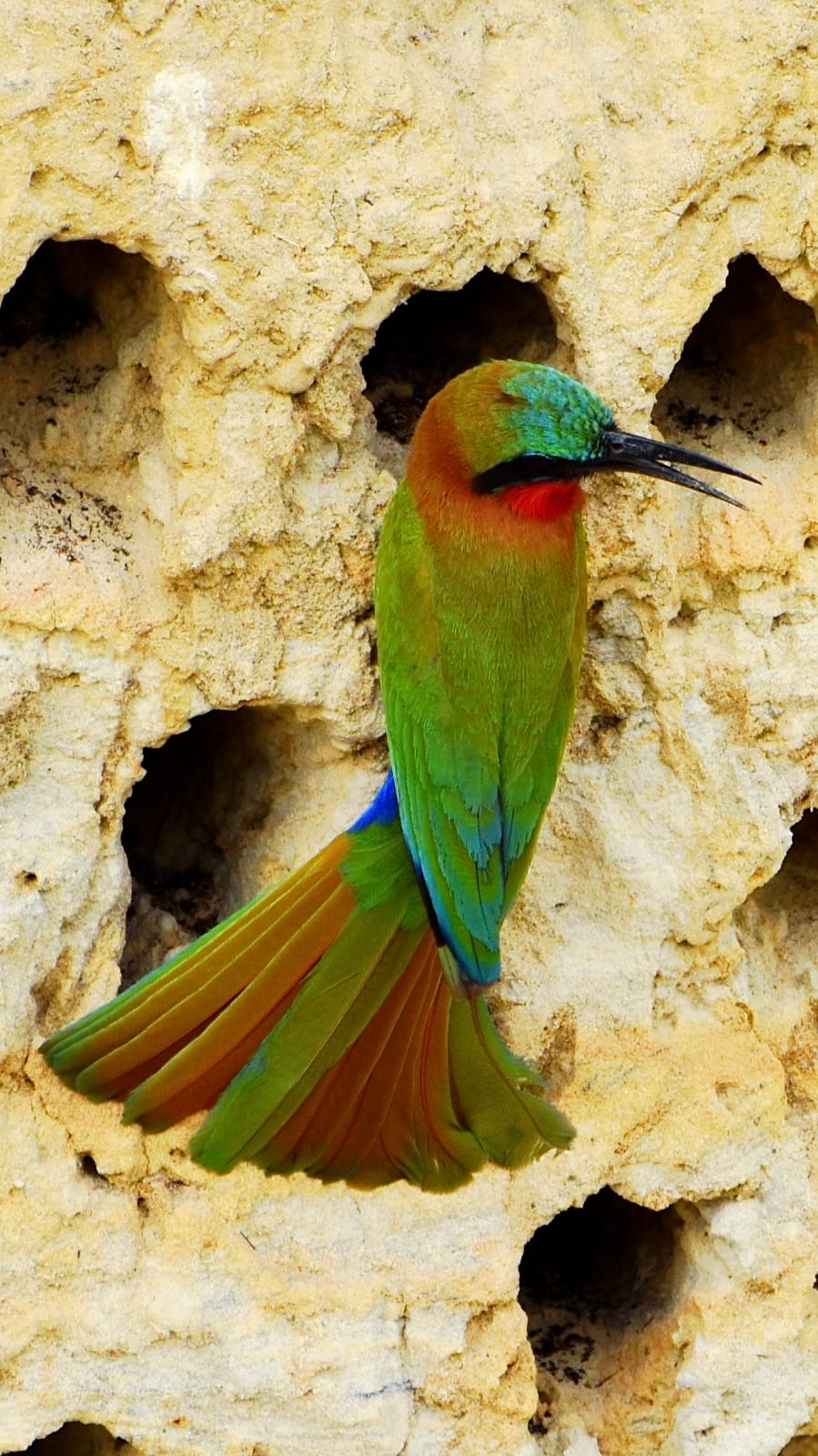
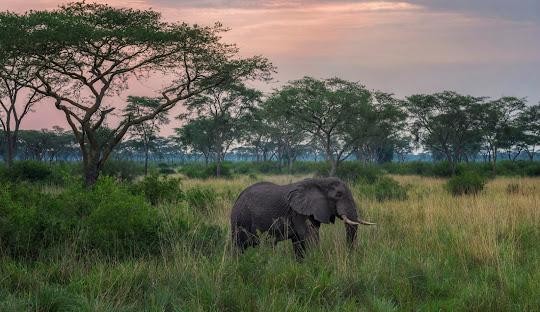
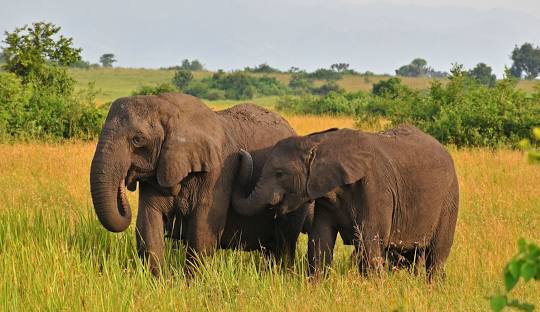
18. The African elephant population in Uganda is recovering. After being devastated by poaching during the political turmoil of the Idi Amin era in the 1970s and early 1980s, Uganda's elephant population has recovered significantly. Murchison Falls National Park now hosts over 1,500 elephants the largest population in the country.
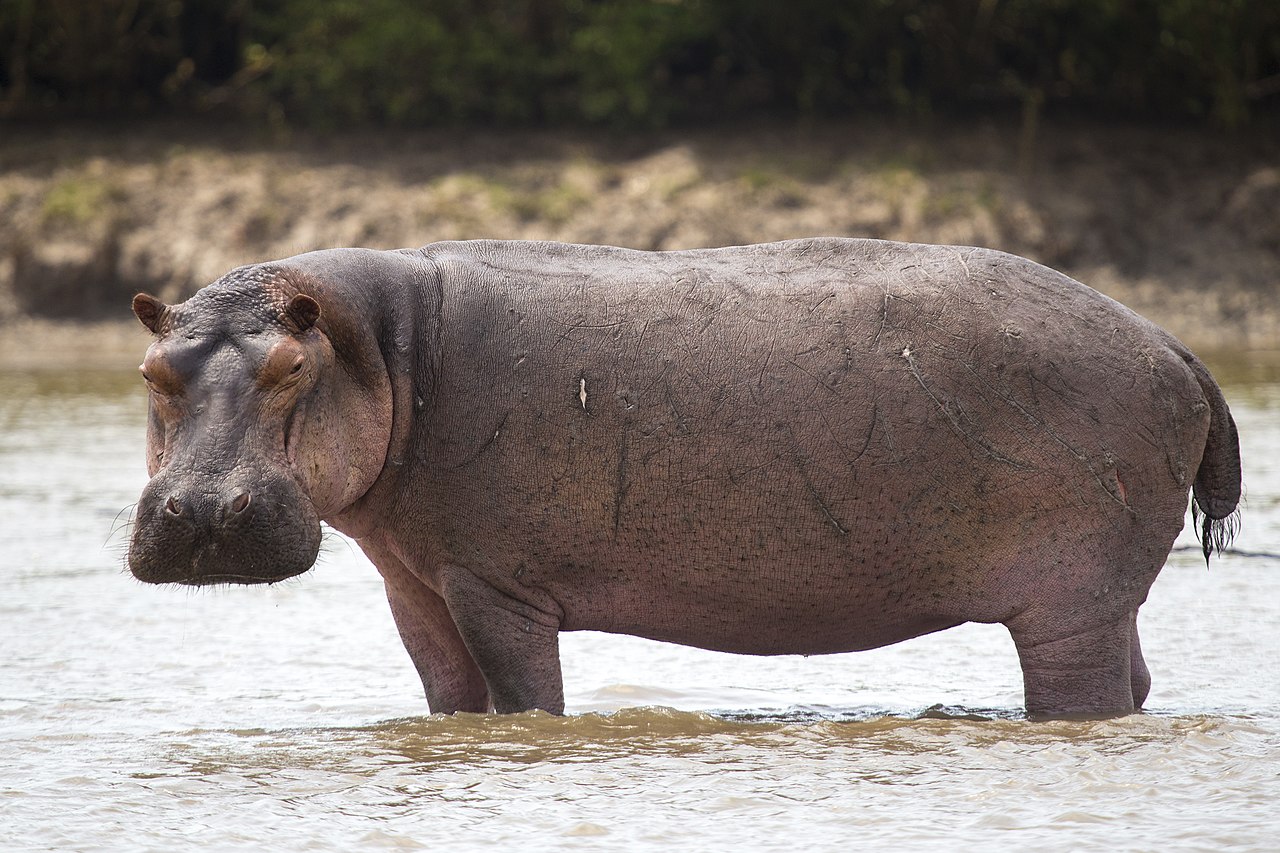
19. Hippos are among the most dangerous animals in Africa and Uganda has thousands. Lake Edward, the Kazinga Channel and the Nile below Murchison Falls all host large hippo populations. The Kazinga Channel boat cruise regularly passes within metres of pods of 50 or more animals.
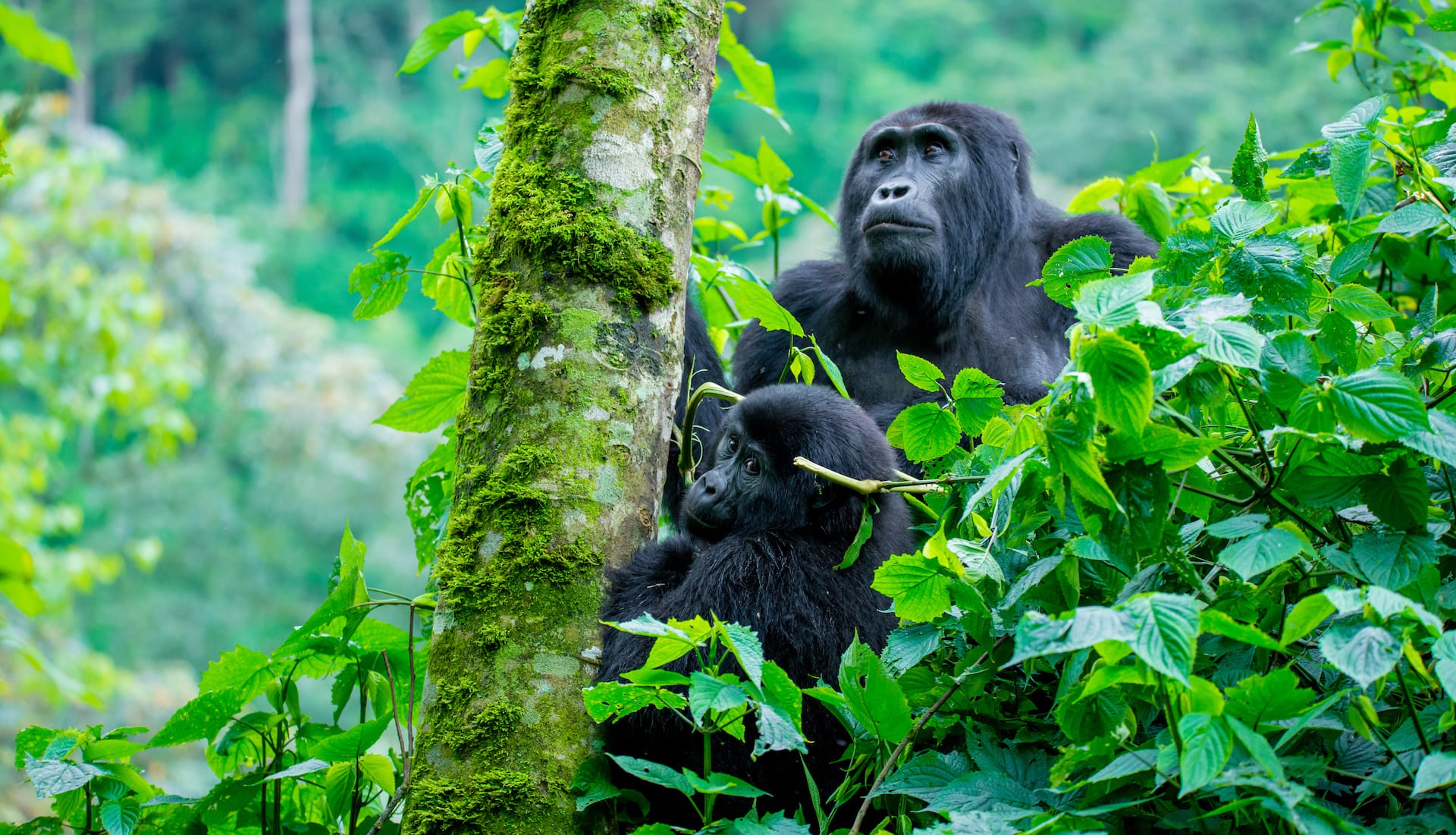
20. Uganda has 51 species of reptiles in Bwindi alone. The biodiversity of Bwindi extends far beyond the gorillas. The park contains 51 reptile species, 14 endemic to the Albertine Rift, as well as 310 butterfly species, 88 moth species and 27 species of frogs.
People & Culture
24. The Buganda Kingdom is one of the oldest and most organised traditional kingdoms in Africa.
Food & Daily Life
29. The matoke is Uganda's national food.Matoke green bananas steamed inside their own leaves and mashed into a dense, starchy dish the colour of pale gold is eaten daily by the majority of Ugandans. It is filling, nutritious, and once you have eaten it properly cooked with groundnut stew, you understand why.
30. Uganda is one of the world's largest producers of bananas. Uganda produces over five million tonnes of bananas per year, second only to India globally. There are more than 30 varieties cultivated in Uganda, from tiny sweet finger bananas sold at every roadside to the large cooking varieties that anchor the national cuisine.
31. Rolex is not a watch here. The Ugandan rolex a roasted chapati rolled around a freshly fried egg omelette with tomatoes, onions and sometimes cabbage is the country's most beloved street food. The name comes from "rolled eggs." It costs almost nothing and is available on every street corner in Kampala from six in the morning.
32. Groundnut stew is the soul of Ugandan cooking. Made from ground peanuts cooked with tomatoes, onions and spices, groundnut stew is served with matoke, rice, posho (maize porridge) or sweet potato. Every family has a version they believe to be the definitive one.
33. Uganda produces some of East Africa's finest coffee. Robusta coffee originated in Uganda it is literally indigenous to the country, growing wild in the forests around Lake Victoria before commercial cultivation began. Uganda is now one of Africa's top coffee exporters, with specialty arabica from Mount Elgon and the Rwenzori highlands increasingly appearing in high-end cafés worldwide.
34. Nile perch changed an entire ecosystem. The introduction of Nile perch into Lake Victoria in the 1950s caused the extinction of more than 200 species of native cichlid fish one of the largest recorded extinction events of vertebrates in history. It is a cautionary tale about ecological intervention studied in universities around the world. Ironically, Nile perch is now one of Uganda's largest export industries.